

Living with primary photoreceptor disease, including retinitis pigmentosa, Usher syndrome, or cone-rod dystrophy?
CLARICO is a study of an investigational cell therapy designed to replace the damaged photoreceptors in the retina to potentially restore vision.
If you or a loved one has been diagnosed with primary photoreceptor disease, complete the CLARICO Checklist to see if you or your loved one may qualify to participate.
Call us at (877) 380-3931 to see if you may participate.
Living With Primary Photoreceptor Disease
Replacing photoreceptors lost to disease to potentially restore vision

The retina contains cells called rods and cones, which are known as photoreceptors. These are specialized cells that convert light into signals sent to the brain that allow us to see. In primary photoreceptor disease (including retinitis pigmentosa, Usher syndrome, and Cone-Rod Disease/Dystrophy), damaged cells lead to loss of vision. Over time, the damage can progress which causes worsening vision and ultimately blindness.
There is no cure for these conditions. Current treatments are primarily supportive, such as tools to aid vision, but none of these options address the root cause of photoreceptor loss in the retina. Cell therapy involves replacing the cells lost to disease with new healthy cells. The CLARICO study is evaluating OpCT-001, a cell therapy that is created from stem cells. These stem cells are converted into cells that can become the light-detecting cells in the retina, called photoreceptor cells. OpCT-001 cells will be administered to the back of the eye by a trained retinal surgeon, to replace the photoreceptor cells lost to disease with new healthy cells in an effort to potentially restore vision.
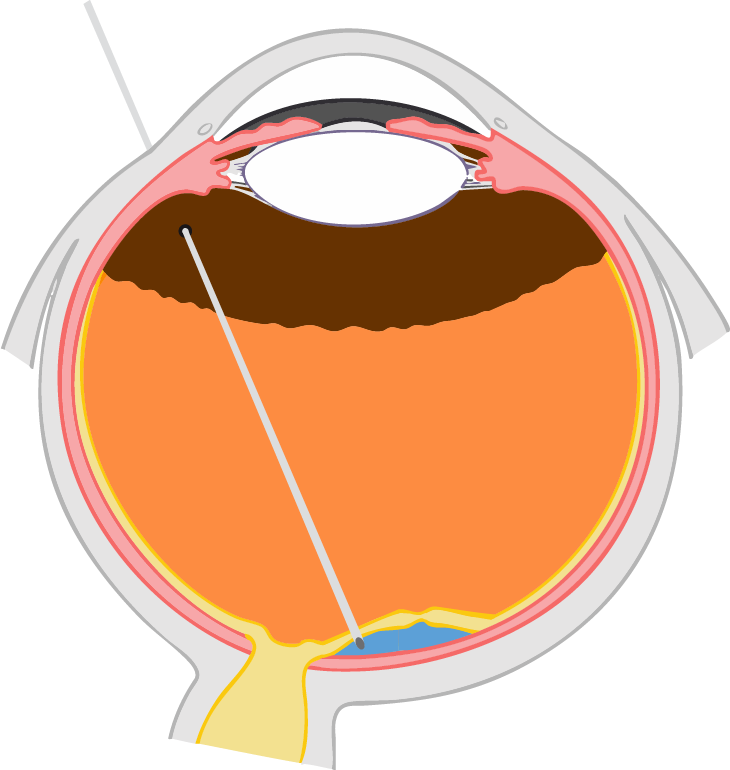
How does OpCT-001 work?
Call us at (877) 380-3931 to see if you may participate.
Creating OpCT-001 for use in the CLARICO study


Who can take part in the CLARICO study?
You may be able to take part in the CLARICO study if you:


Have primary photoreceptor disease, including:
- Retinitis Pigmentosa (RP)
- Usher Syndrome
- Cone-Rod Disease/Dystrophy

There will be other study requirements that the study team will discuss with you.
Call us at (877) 380-3931 to see if you may participate.
Study Details
CLARICO is a Phase 1/Phase 2a clinical study that is the first human clinical study of OpCT-001. You can also find information at www.clinicaltrials.gov; NCT06789445.
The study is designed to address the following questions:
- Is OpCT-001 safe and well tolerated?
- Does OpCT-001 impact retinal structure?
- Does OpCT-001 change performance on a vision test?
Study Overview
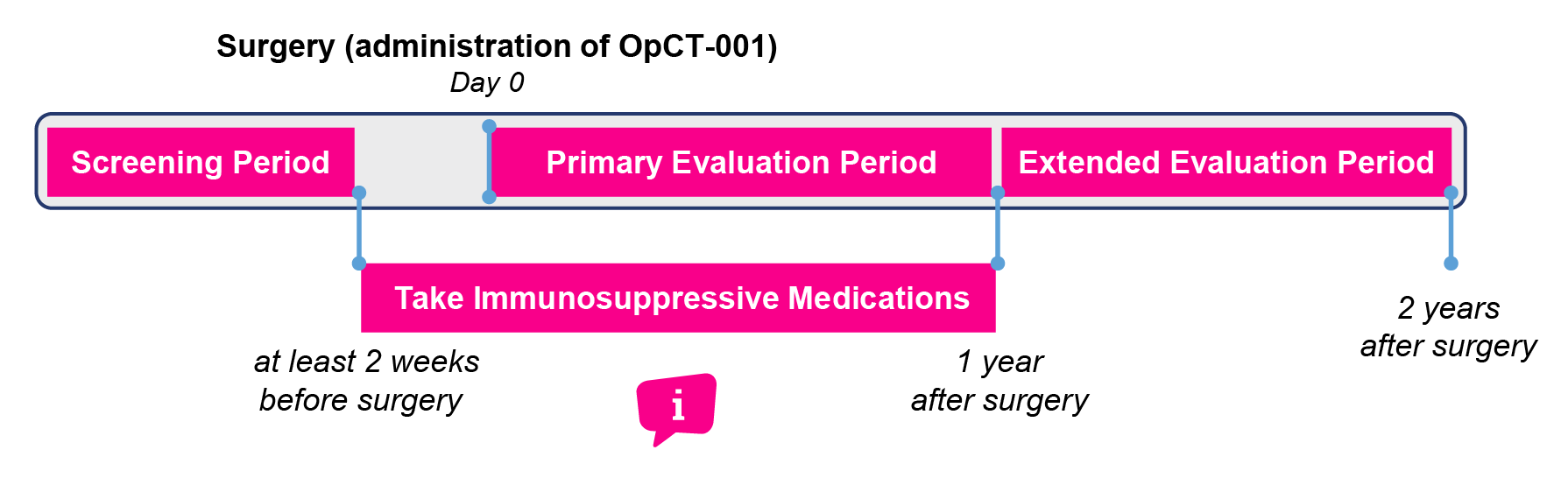
- Review, discuss, and sign the informed consent form
- Provide background information to your study doctor, including your medical history
- Undergo a physical examination
- Provide blood and urine samples
- Undergo ophthalmic and visual assessments
- Complete questionnaires related to your vision
- Attend clinic visits (the frequency of the visits decreases over time)
- Take immunosuppressive medications
- Immunosuppressive medications are taken to prevent your body from rejecting the OpCT-001 cells. This will give the OpCT-001 cells a greater chance at surviving in your retina once they have been administered.
- Undergo surgery to receive OpCT-001 cells
- Provide blood and urine samples
- Undergo assessments including ophthalmic and vision assessments, physical examinations, and questionnaires
- Communicate any concerns or issues to your study doctor
- Clinic visits (the frequency of the visits decreases over time)
- Undergo assessments including ophthalmic and vision assessments, physical examinations, and questionnaires
- Communicate any concerns or issues to your study doctor
- Provide blood and urine samples
By participating in a clinical study, you are helping to represent both your community and people who are affected by primary photoreceptor diseases.
Greater diversity among study participants allows researchers to understand how potential medicines work in different people. Factors such as genetics, race, ethnicity, age, and sex can impact how different people respond to the same treatment. That is why it is important that people of all backgrounds are included in clinical studies.



Of course, participant safety is the top priority of this study. Before you participate you will be given all the details about the study, including potential risks and benefits of taking part, so you can review and discuss this decision with your doctor, family, or friends. The study team will also monitor your health while in the study.
If the CLARICO study is a good fit for you, and you are able to take part, it is important to know that you always have a choice. You are free to leave the study at any time for any reason, by contacting your study team.
Call us at (877) 380-3931 to see if you may participate.